

Foods – Hello braces, good-bye taffy. At least for now.
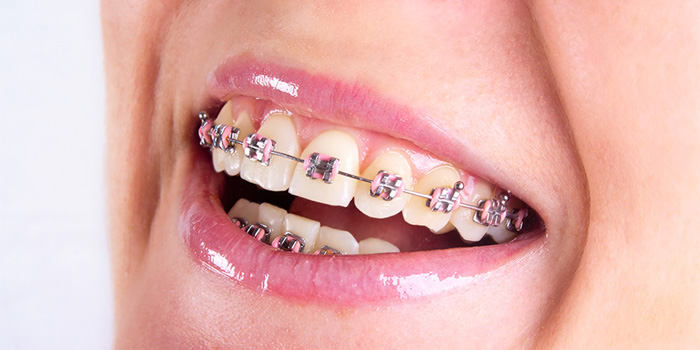
Frequent snacking can be your teeth's biggest enemy. Everyone has plaque bacteria in their mouth. When this bacteria meets up with sweet foods or beverages, the bacteria create acid in your mouth that remains for 20 minutes after you finish your last snack. The acid attacks your tooth enamel and makes it weak. That's when the cavities can start.
Part of life with braces is the challenge of eating foods that are right for you and easy on your braces. When your diet consists of part real food and part junk food--braces call for a change in eating habits. Don't despair. We haven't lost a patient to starvation yet.
Think if its right before you bite!
What to avoid:
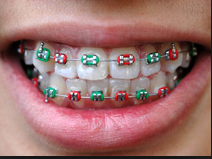
All Gums including Freedent Taffy Toffee Licorice Gummy Bears Starbursts Jelly Beans Tootsie Rolls Raisins Snicker and Marathon Bars Sugar Daddies Slim Jims and Beef Jerky Lollipops and Suckers Hard Candy Hard Cookies Jawbreakers Nuts Caramels
Air Heads Now & Laters Fruit Roll Ups Fruit & Muesli Bars Peanut Brittle Crunchy Peanut Butter Popcorn Hard pretzels Doritos and Fritos Any hard chip snacks Taco shells Candied apples Bagels Dried Fruits Ice Popsicles Celery Stalks Lemon juice Biting into apples, peaches, raw carrots- cut into pieces Meat on the bone- cut off bone Corn on the cob- cut off cob Soft Drinks including diet sodas Pens, Pencils, Fingernails- not foods but in the mouth far too often
Use a blender. Most fruits can be enjoyed if liquefied such as bananas, mangoes and melons. Cut anything that looks too hard to handle into smaller pieces. High sugar foods should be the smallest part of your diet, as well as high acidic foods such as tomatoes, salsas, vinaigrette dressings, oranges and pineapples. Your tooth enamel is going through enough right now.
Green vegetables will cling to your braces as if by magic. And you'll probably be the last to know. If salad is your mainstay, check your smile in the mirror after meals or risk someone pointing out that piece of lettuce hanging from your braces.
Soon, it will be second nature to you to turn down dangerous foods. In our office, we keep a collection of delicious recipes discovered by our patients. As you invent new ways to enjoy old favorites, please share your culinary secrets with us. More on this website

benefits of free quotes comparison
News about Insurance
Benefits of free Quotes Comparison
The world is never completely fair so, if you go to an insurance agent to ask for help, you will either be charged for the advice, or there will be a commission added on to the premium rate you pay for the policy you buy. Nothing coming from a business is ever "free". If you just want independent advice and do not want to buy, you pay for the time. If you buy, you pay for the guidance through a higher premium. However, you should understand that most agents will not tell you how much commission they earn, so the advice you receive is often biased, i.e. the agents recommend you buy the cover giving them the highest commission and not giving you the best value. This means you are the best person to give yourself advice. Your time is free. Access to the internet is free. There's a wealth of information and advice online if you take the opportunity to look. Of course, some content is pure marketing and less than helpful. Just be persistent, you'll get the hang of it and after a while it's easy peasy to find the information for car insurance you need. You should be able to find great guidance and with that an affordable rate for your car insurance. Now come to a site like this which makes it easy to contact all the major insurers in your state. All the quotes you get here come free of charge. More so, you don't have an obligation to purchase any thing at the time. No one is going to act like the hard-selling agents you meet face-to-face. Just do your research and compare any and all data you have accumulated. In this, remember cheap auto insurance is not necessarily good value insurance. What you should be looking for is coverage against all the risks most likely to affect you and at a price that's not going to make you fall of a fiscal cliff. So where should you start?
Let's assume you want to see how adjusting the deductible benefits you. Simply get three sets of quotes with a deductible of $250, $500 and $1,000. With all the other pieces of information staying the same, it easy to see what the real differences are if you agree to accept more of the risk. It's the same with different makes and models. If you are going to change your current vehicle, you can put in all the types of vehicle you would be most interested in buying and discover how much or how little it will cost you to insure them. That way you can buy without the premium rates later proving a terrible shock to the system. Don miss the bottom line by checking for the promised discounts. Only by using the free auto insurance quotes available through this site can you compare and find the best deals.
Cheap auto insurance: how does the free quotes comparison system benefit you? Only when you can see the price range can you find the cheap auto insurance cover you want.
Cheap auto insurance is available but you need to understand how to save on auto insurance. Cheap auto insurance is revealed when you cut everything down to basics.
Understanding US auto insurance companies is the first step to finding cheap auto insurance cover. Shopping blind never gives you the best chance of finding the cheap auto insurance you need.
Mobile Ads: What Works, and What Doesn’t

Mobile ads are a great way to reach today's on-the-go consumer, but some mobile ads are more effective than others.
Despite their smaller size, mobile display ads — tiny banner ads that pop up in a smartphone's Web browser — can have a big effect on consumers who are in the market for certain types of products, according to a Columbia Business School study. Specifically, the researchers discovered the following:
Mobile ads work well for products that have a practical and important use, like a lawn mower or a washing machine. Mobile ads work well for high-involvement products, such as those where a lot of time, thought and energy are placed into the decision — for example,buying a car. Mobile ads don't work for just-for-pleasure items, like fancy watches. Mobile ads don't work for low-involvement purchases, like movie tickets or toothbrushes. These are purchases that pose a low risk to the buyer. Miklos Sarvary, co-director of Columbia Business School's media program and co-author of the study, said too many marketers are using a "spray and pray" approach to digital ads.
"They're just putting mobile ads out there and hoping that they work," Sarvary said in a statement. "Limitations in tracking smartphone ads have always made it difficult for marketers to track and optimize their return on investment, but we've unlocked a part of that mystery now, which means they'll know how to best to spend their dollars."
For the study, researchers looked specifically at the effects of mobile display ads (MDAs) viewed on a variety of mobile devices, including smartphones. They studied survey data from nearly 40,000 American consumers about their reactions to MDAs.
More than 50 products — ranging from consumer packaged goods to cars to financial services — were represented in the ads. After viewing one of the ads on a mobile device, participants completed a survey that assessed their attitude toward and intention of buying the product.
To determine what kind of products are best served by mobile display ads, the researchers classified each product as either "utilitarian," which means it serves a useful purpose, or "hedonic," which refers to products typically bought just for pleasure, like movie tickets or a fancy new watch.
Sarvary thinks the study's results are rooted in psychology. Before making a big purchase, he said, people tend to do a lot of rational thinking, by comparing one product to another and weighing their options.
Sarvary said this rational thinking, which can go on for several weeks, is magnified even more if the product being purchased isn't just for entertainment — for example, a new big-screen TV — but one that serves a more useful purpose, like a new family car.
"If a display ad for that car shows up on your smartphone — even if it's tiny and doesn't provide you with new information — it'll reinforce what you already know about the product," Sarvary said. "The mobile ad's strength is not adding new data, but reminding you of what you already know and making you think about the product again."
The study's authors believe their findings carry huge implications for marketers who are planning a multichannel campaign for a product. Sarvary said that, rather than sticking with a "spray and pray" approach, companies might find that it's more effective to launch mobile display ads after a product has been advertised in other media.
"That way, the banner ad seals the deal," he said.
The study was co-authored by Andrew Stephen, an assistant professor of business administration at Columbia Business School, and Yakov Bart, an assistant professor of marketing at INSEAD.